

On Being Baby
surviving surgery, a death anniversary, and living with family

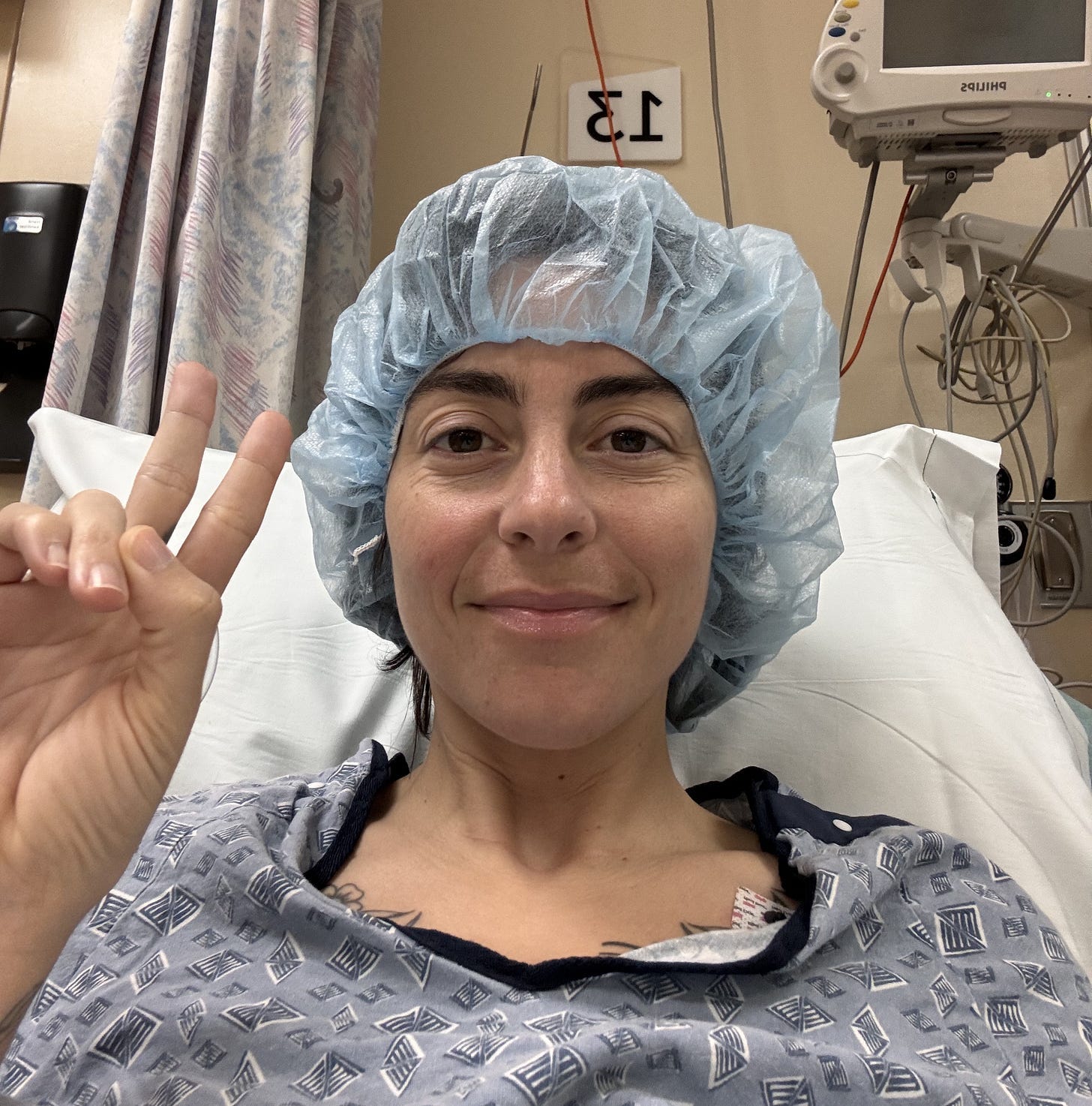
When I awoke from my surgery, I felt a dull, agonizing pain where the instruments had been. I remember the concerned look on my doctor’s face as I came to and squirmed this way and that, and then a nurse giving me a dose of Dilaudid1. The Dilaudid was nice. I forgot the pain in seconds and relaxed in my bed, my head lightly abuzz, still in a dreamlike state after the anesthesia.
Losing all sense of time, the next thing I know my nurse is calling the doctor to tell her about the drugs they gave me. When did the doctor leave the room?
Then I started whisper-shouting at the nurse to please let her know I’m doing much much better, and I don’t want her to worry— I feel so bad she was making such a worried face. The nurse smiled at me and relayed the information. All I could think about was the doctor’s twisted expression.
A few minutes later (or maybe thirty—what is time in a hospital?), the nurse gave me apple juice to sip on, and I realized I was suddenly the thirstiest I’d ever been in my life. Why hadn’t I noticed until she offered it? She held the straw to my mouth, my hands still too weak to grasp anything.
How nice it feels to be baby again, I thought—despite the fact that I’m always the baby, especially in my family, and many would argue I’m treated accordingly. Still, it felt more deserved in the hospital— there was no guilt attached to it. The attention, the soft voices, the gentle hands. No one needed me to be alright. Embarrassment didn’t exist here. I was allowed to need help without feeling bad about it.
The juice was delicious. It came in a shallow container with a foil lid, the straw absurdly too long for it. I thought it was an odd, impractical combination—the kind of thing you notice when your mind needs something to complain about, when you’re otherwise at peace.
I looked to the bed across from me and noticed the tired face of a woman I had seen in the waiting room before our surgeries. Her daughter—or someone I assumed was her daughter—had been with her then and brought a knitting project to pass the time while her mother was under the knife. They had been joking around with each other, and their loud laughter eased my nerves before my name was called to enter the pre-op room. I smiled at her as our eyes met, and she smiled back weakly.
The nurse assigned to my recovery made idle chit-chat with me, asking who Kenny was, pointing to the tattoo on my forearm.
“Oh, my brother. He died. Eight years ago this month, actually.”
The sadness didn’t creep into the words like it normally did, and I was relieved when the nurse showed no pity and offered no follow-up questions. My brother is dead, period.
The drugs were making me cheerful and numb.
After an hour, the fogginess had mostly dissipated, and my nurse helped me sit up and get dressed. I was wheeled outside to where my parents were waiting for me in their white Honda CR-V.
In and out! Snip snap shut. $13,000 for an outpatient surgery that only took 45 minutes in the operating room. Holy heck. I should have grabbed a handful of apple juices on the way out.
I awoke with severe cramping a few nights later—which was to be expected following the surgery—and it kept me up for several hours.
I turned on my heated blanket to soothe my spastic abdomen, but became too afraid of falling asleep with it on and potentially burning myself (or the house down), so I unplugged it and sat in painful misery.
For an hour, I wrestled with the thought of taking a shower, afraid I might wake someone in the house.
Over the last year, I’ve been living with family, and while acquaintances are quick to ask if it’s driving me crazy, it’s really been the best thing for my recovery, my healing, and my bank account. As this time comes to an end (I’ll be moving into my own place at the end of the month), I understand how much it’s given me: permission to be cared for, to be weak, to be a baby.
The pain wasn’t going away. The ibuprofen I took wasn’t strong enough, and I certainly didn’t have any Dilaudid on hand (the doctor had prescribed me 800 mg ibuprofen, but I didn’t even pick that up from the pharmacy—I’m a big girl, capable of taking four pills at a time). I resolved to get in the shower as quietly as I could.
I crept through the house along the outer edges of my heels, my eyes adjusting to the violet darkness and making out familiar shapes of furniture. I slipped through the narrow walkway by the dining table, holding my breath as I rounded the corner into the bathroom, shutting the door as softly as possible because it otherwise makes an obnoxiously loud click.
With the bathroom light came the fan, and I could only hope none of these noises would wake my sleeping family.
There is so much guilt wrapped up in being awake in the middle of the night—something I’ve carried with me from my years in active addiction: those restless hours between dark and dawn, staring at the ceiling, angry with myself for getting high again, ashamed and perplexed. I had to remind myself this isn’t that.
I turned the knob to its hottest setting and stepped into the shower, letting the water warm my skin and muscles. The heat worked its magic, erasing the tension and soothing the cramps. My mind finally returned to that place where I knew sleep would come, though I couldn’t shake the fear that if I turned the water off—if I left that warm, wet haven—the pain might return.
I shut off the shower before my thinking became waking, and slipped back into bed, grateful that my body, although now pale red from the extreme heat of the shower, was relaxed enough to drift off to sleep.
Living with my family this last year has helped me come back to myself. It’s kept me from returning to the void. It’s shown me I don’t have to disappear to survive pain.
And if I ever fear disappearing, I know someone will always be there to care for me—because I’m baby.
As my addiction is mainly to stimulants, I didn’t mind taking a single dose of this opioid under medical supervision, with my doctor fully aware of my history. But I respect that opioids carry a high risk for many people, and am mindful of that risk in my own recovery.